
 Graeme Warring
“I shall either find a way or make one,” said Hannibal, the legendary Carthaginian general and statesman over 2,000 years ago. His statement referred to his brilliant tactic of attacking his Roman enemies by crossing the Alps with a formidable army using African war elephants for transport. Hannibal’s declaration became one of the most legendary quotes in history, defining persistent leadership and determination.
As I drove my ’02 Discovery II, the “Gurumobile,” through a wild sandstorm in Tunisia (formerly part of Carthage), it came to me: Hannibal’s persistent spirit and dedication of purpose so perfectly embody the ancestral DNA of Land Rover. Had he been a marketing executive instead of Commander in Chief of the Carthaginian Army, he would have written a Land Rover tag line for the ages.
After a few days exploring the medinas and ancient ruins of Carthage, I headed south on Trans African Highway 1 to El Jem, two hours south and the site of one of the most incredible, third-century BC Roman Colosseums. In fact, if you ever watched the epically funny Monty Python’s the Life of Brian, you have seen it too. This piqued my interest. With the help of Google, I discovered that Tunisia has served as the location of many famous movies such as Star Wars and The English Patient. After a couple of hours, I pinpointed several filming locations on the map and decided to include those sites among the many others that I would visit on my trip.
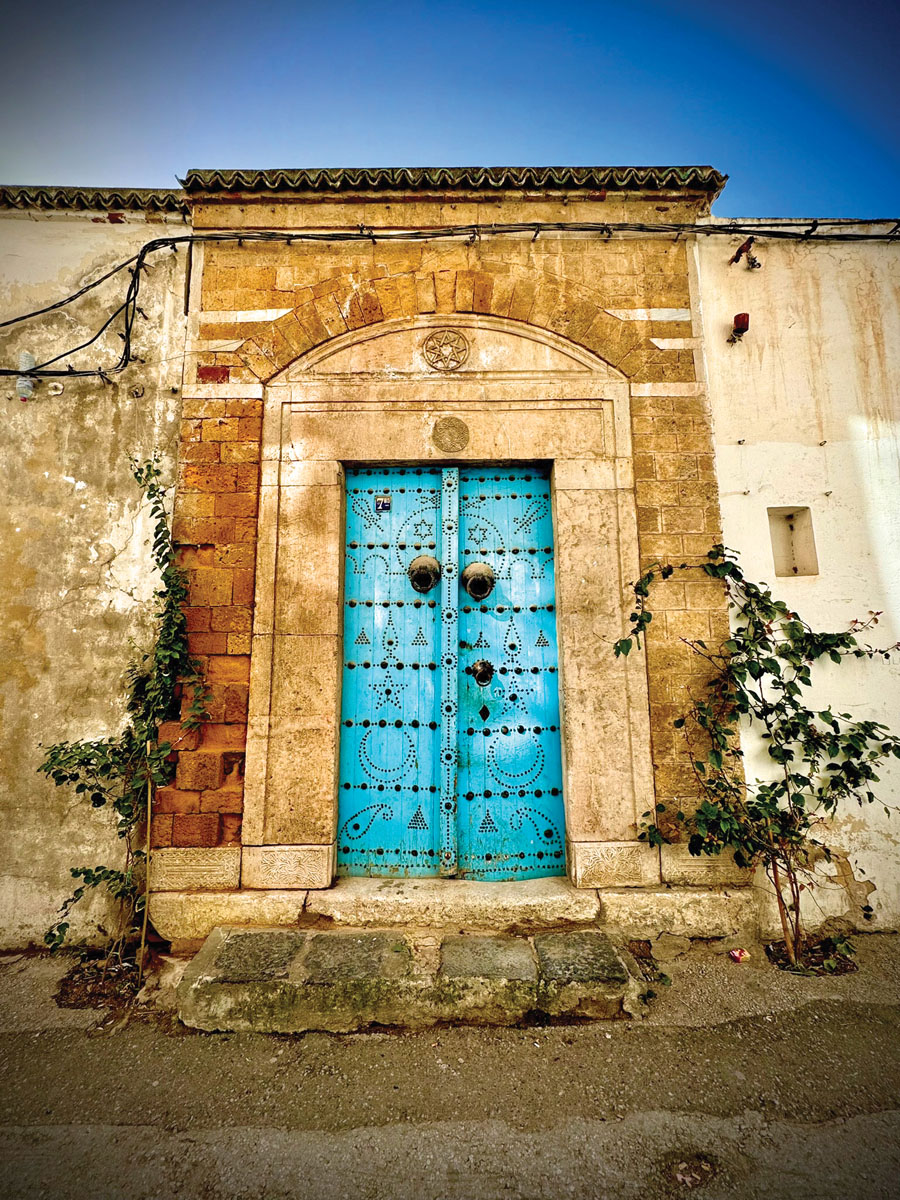
Kairouan is a UNESCO World Heritage site and the 4th holiest of places in Islam. It is said that seven visits to Kairouan’s Mosque of Uqba equal one pilgrimage to Mecca. Kairouan is also a major center of carpet, rug and textile production. I had planned to load up on rugs for my home in Italy, so I immersed myself in the mission of learning the ins and outs of rug production, visited the carpet workshops and weaving mills that dot the medina and bargained my way to a haul of rugs that would make Aladdin green with envy.
Raiders of The Lost Ark was also filmed in the Kairouan medina, including the famous scene where Indiana Jones grows tired of the theatrics of the swordsman and impatiently shoots him, the Market Chase Scene, the Truck Scene where Indy shoots the driver and many more.
Tatouine is a small town famous for its Berber villages and, significantly, the inspiration for the fictional “Tatooine,” the home planet of Anakin and Luke Skywalker. Ksar Hadada is an ancient Berber granary with corridors and “gorfas” (storage rooms) depicted as Anakin Skywalker’s childhood home. Part of the complex has been converted to a hotel, while the remainder sits untouched, just as it was centuries ago.
From Tatouine, I headed to the remote Oasis de Gsar Ghilane. In my mind’s eye, this oasis sits in the middle of barren sand dunes, traversed by caravans of wild camels, the lush date palms surrounding a crystal-clear series of pools fed by warm spring water. Instead, I see the reality of a thriving tourism industry that has been built up around it, with accommodations ranging from Bedouin tents to posh villas. Quad bikes and camel rides provide day trippers and visitors with a real Sahara-desert experience.
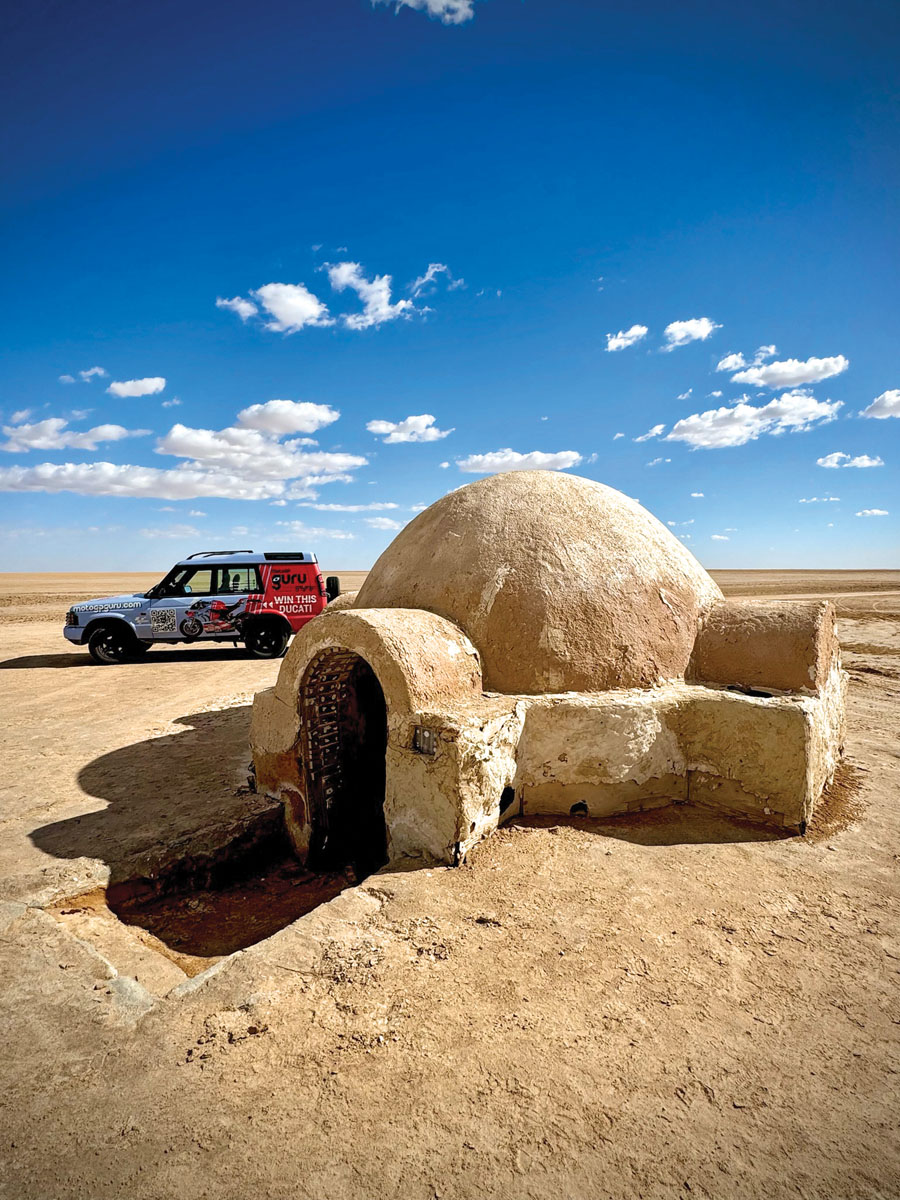
Tozeur puts you in the heart of the Star Wars fan zone. To the west is Lars Homestead, a lone “igloo” structure where Luke lived with his Uncle Owen Lars in Episode IV: A New Hope (1977). It is off the highway and requires a several kilometer drive through a salt lake to get there. There is no sign pointing to it nor even a road. You must trust the Force to lead you there (or Google Maps, which has it pinpointed). If you are lucky you will see some tire marks; if there are none you are either in the wrong spot or it recently rained, in which case don’t drive on the salt lake or you will be leaving without your car.
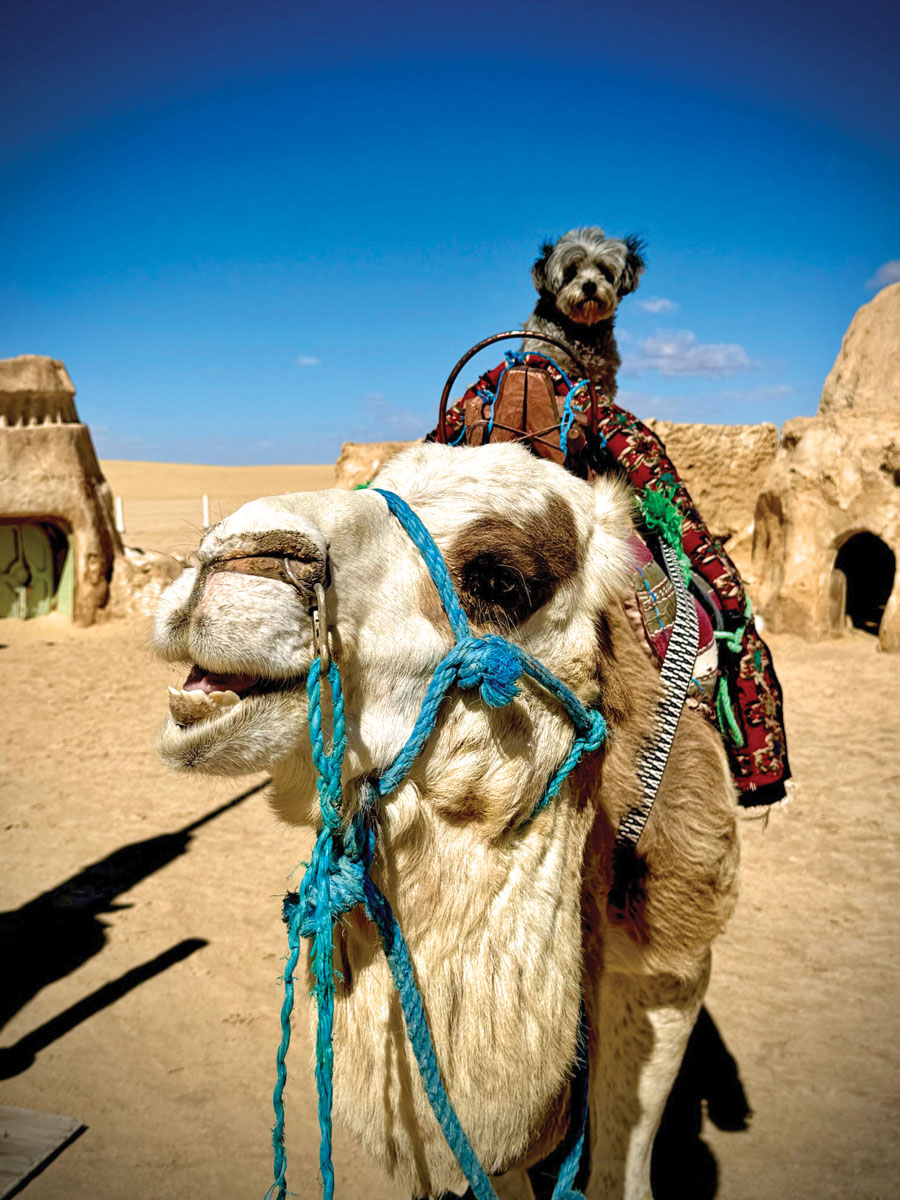
Further on and to the north is Mos Espa, a stand-in for “spaceport city” on the desert planet, Tatooine, in the Star Wars universe. It was home to Anakin and Shmi Skywalker in Episode I: The Phantom Menace. Here Lola had her first camel ride and I made the questionable decision to drive overland through the Saharan dunes to Ong Jamal and beyond to an oasis near Ben Guecha, crossing the Chott El Gharsa salt lake. While the crossing was uneventful, I soon discovered that, unknown to me, I had crossed the border into Algeria.
You may be wondering how I discovered this? The thundering advance of military 4WDs and gun-wielding soldiers gave it away. In SWATesque fashion, they skidded their vehicles to a halt, blocking the road, and dismounted with guns trained on the Gurumobile, the clueless Australian inside and Lola, my Mexican rescue dog.
Language barriers make it difficult to do things like order food or find a toilet, but they make it especially impossible to explain why you decided to wander off piste across a deserted salt lake in the Sahara desert, aiming for an unpopulated oasis, really nothing more than a green patch of date palms and what looked like the start of a bitumen road. Surely nobody could be that stupid, could they? Er, yes. Moving on…
Sbietla, an ancient Roman city, is remarkably preserved and only partially excavated. The Temples, Roman Baths and civic infrastructure are clearly and readily accessible. Besides a couple of other tourists and several thousand cats, I was the only one there. After a few hours of looking around, I made for another highlight of the route, Rommels Road, an off-road drive that follows General Rommel’s withdrawal from Libya as allied troops closed in during World War II.
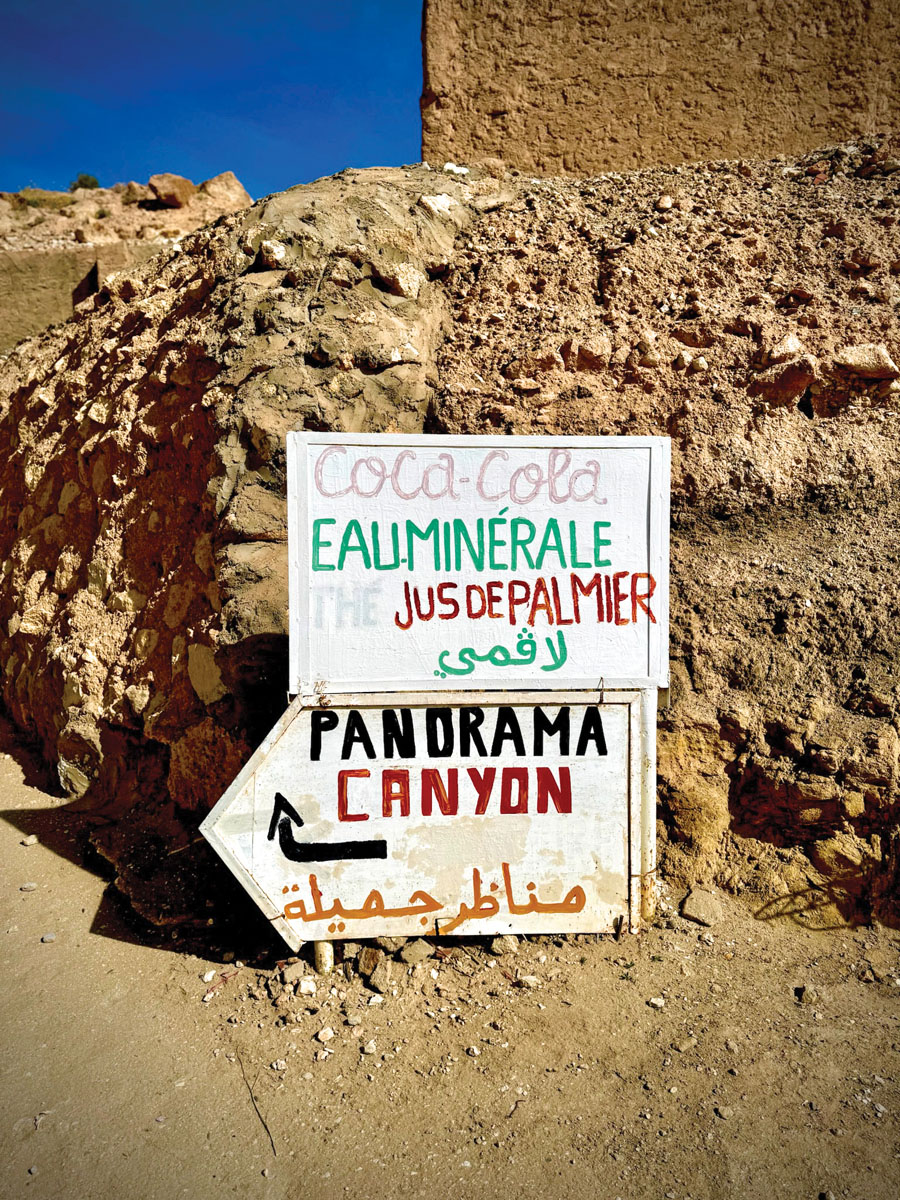
As I crossed a ridge overlooking two valleys, a dodgy sign caught my eye; I pulled over for a look. A random guy, Farouk, approached me and we chatted. He told me of a valley that was not far away that was the setting for Raiders of the Lost Ark, Star Wars and The English Patient.
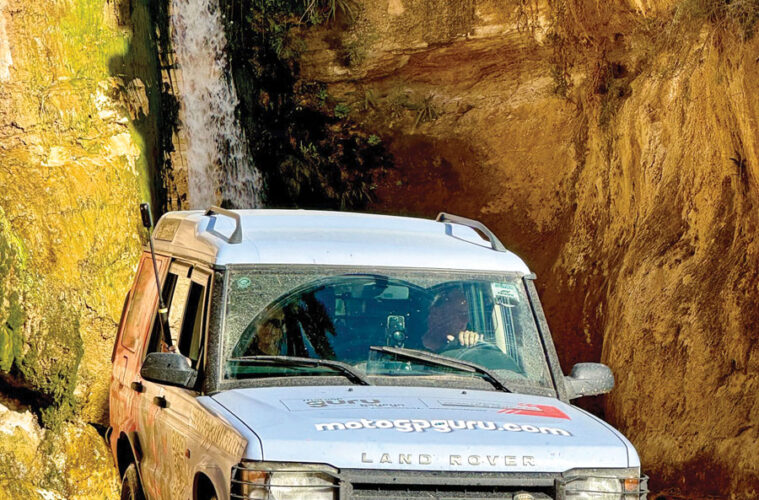
As I had a respectable 4WD, he told me I would be able to make the drive up the river to the canyon. For only €180 he would be happy to show me the way. After negotiations and $40 USD, we hit the road, Farouk aboard his scooter, arms waving wildly for me to follow him. Approaching the valley, he disappeared through a gap in the Armco railing and went down an impossibly steep descent on his scooter. I followed, my eyes mostly open the entire way down. Lola slid off the front seat and into the footwell.
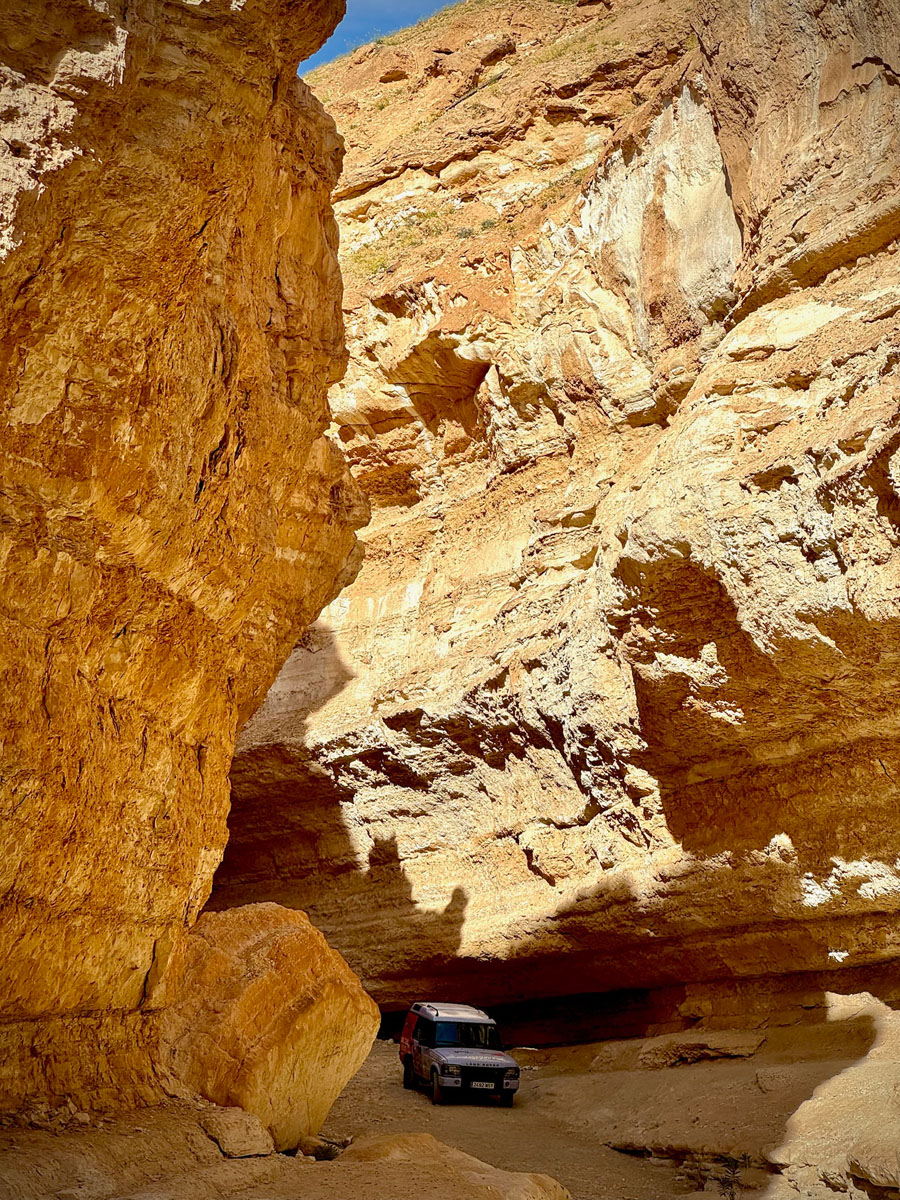
Once in the river bed, we charged forward, Farouk dodging most of the standing water which I ran though either because I had no choice or because it was fun. For half an hour we drove up the river bed, surrounded by date palms, shade trees and tall papyrus which lined the banks. Eventually Farouk stopped at a junction, the setting for the famous canyon featured in the movies mentioned earlier. The canyon, narrow and with an everchanging floor profile due to flooding, was thrilling to drive though, even more so when you have the Raiders of the Lost Ark theme song playing in your head.
Once deep inside the canyon, we stopped to take photos and then hiked up and out of the canyon, along the Mesa above and eventually back to the car. By now Farouk was feeling more like a mate than a tour guide and he offered to take me to a “special place.”
Accessing the special place required going “overland” through rocky plains for several kilometers to the edge of a deep ravine. We eventually stopped at a point where three massive canyons merged. To the west, rainfall from Algeria flowed into the ravines, to the east and south the ranges of Tunisia channeled its rainfall. The sheer side of the western canyon featured an abandoned Berber village. It had flooded centuries ago during a deluge that washed much of the village and its inhabitants over the cliff and into the gorge below.
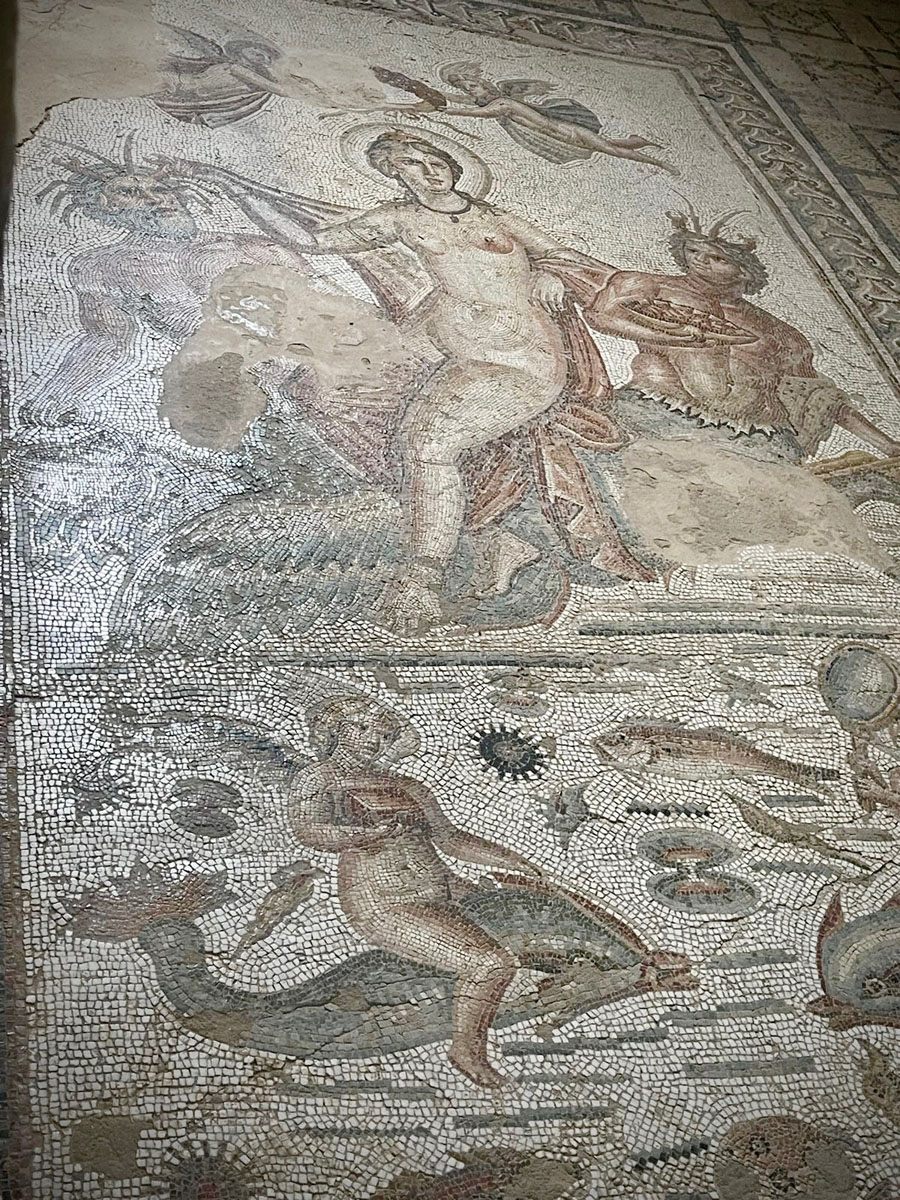
The rest of my trip took me through the “Bread Basket of Europe,” the rich agricultural regions of northern Tunisia that resemble New Zealand more than Africa. I finished in the coastal town of Bizerte, a fishing port with a centuries-old medina as its heart. This last leg felt like a letdown after the incredible action and adventure of the Sahara, its salt lakes, sandstorms (haboobs), endless sand dunes, oases and wild camel caravans. If anything, it provided the stark contrasts you will see in the north and south of Tunisia while continuing to offer up more in the way of ancient ruins, mosaics and antiquity.
Some three weeks and 2,400 kilometers later, Lola and I returned to Italy on a ferry. While we were sans elephants, we had our own Hannibal adventure, both “finding a way, and in some cases, making one.”